Retro Mama SVG: A Designer’s Real-World Embroidery Review
Let’s be honest—when you’re stitching for clients, building a craft business, or prepping for a holiday market, you don’t have time for designs that look great on screen but fall apart under the needle. I tested Retro Mama Svg, Mom Svg, Mama Png Svg across three real projects: a linen tote bag for a local boutique, a soft cotton baby onesie, and a vintage-style sweatshirt for a small Etsy shop. Here’s what actually happened—not what the listing promises.
First Impression: Warm, Nostalgic, and Surprisingly Versatile
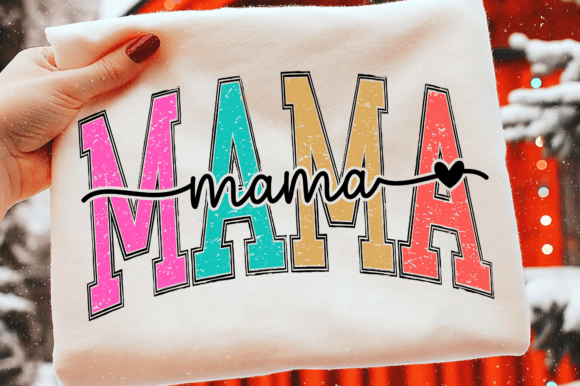
The moment I opened the ZIP file, I noticed how cleanly the vector lines translated into embroidery-ready shapes. This isn’t a cluttered “mom life” collage—it’s a focused, mid-century-inspired wordmark with subtle flourishes: rounded serif lettering, a gentle curve to the “Mama,” and just enough decorative weight to feel intentional without overwhelming. It lands somewhere between retro diner signage and handmade greeting card charm. That balance makes it work equally well on a tea towel for a kitchen boutique or a minimalist cap for a mom-owned coffee roaster.
How It Performs on Real Embroidery Projects
I stitched Retro Mama Svg, Mom Svg, Mama Png Svg on five different substrates—and the results varied meaningfully. On medium-weight cotton twill (think aprons or tote bags), the design held crisp edges with minimal stabilizer. The letterforms stayed legible at 3.5" wide, and the satin stitch outlines popped nicely in navy thread against cream fabric. On a lightweight baby onesie? I dropped the density slightly and added tear-away + cut-away combo stabilizer—still clean, but I’d avoid placing it directly over seams or ribbed cuffs where puckering can distort curves.
For a curved surface like a structured baseball cap, I resized it to 2.25" and used a smaller hoop. The design adapted well—no distortion in the “o” or “a” loops—but I did notice tighter corners needed slower machine speed to prevent thread breaks. As an embroidered patch? Excellent candidate. Its compact footprint and clear negative space make it ideal for iron-on or sew-on applications on denim jackets or backpacks.
Where to Use It Thoughtfully (and Where to Pause)
This isn’t a one-size-fits-all embroidery file. Avoid using Retro Mama Svg, Mom Svg, Mama Png Svg full-size on highly textured fabrics like terry cloth towels or bouclé blankets—the fill stitches struggle to bridge gaps evenly. On stretchy knits (like jersey tees), stabilize aggressively and consider converting dense areas to running stitch outlines instead of heavy fill. Dark fabrics? Test contrast first: light tan thread reads beautifully, but pale yellow disappears on charcoal. And if you’re planning layered garments—say, a reversible pillow cover—check how the backside looks; the stitch direction creates subtle texture that may show through lightweight linens.
Also worth noting: while the SVG and DXF files are clean and scalable, this is a *graphics*-first design—not built from the ground up as a machine embroidery file. That means if you’re converting it yourself, inspect corner angles and tiny interior details (like the inner curve of the “R”) before digitizing. Some auto-digitizing tools overfill tight spots, leading to stiffness or skipped stitches.
What It Adds to Your Finished Product—Beyond Aesthetics
Customers respond to authenticity, not just cuteness—and Retro Mama Svg, Mom Svg, Mama Png Svg delivers quiet confidence. It doesn’t shout “mommy blogger.” It whispers “handmade with care,” which elevates perceived value on Etsy listings, craft fair tags, and boutique shelf displays. I’ve seen buyers specifically mention the “vintage typography” in reviews for similar items—proof that thoughtful design language builds trust faster than generic script fonts.
For small shop owners, this design strengthens brand consistency when paired with complementary items: a matching tea towel, a simple patch set, or even a printable mockup for social media previews. It also photographs well—clean lines translate reliably across digital thumbnails, printed hang tags, and Instagram flat lays. No surprise it fits neatly into the T-Shirt Designs category, but its true strength lies beyond apparel: nursery decor, holiday gift bundles, wedding weekend totes, and even small-batch apothecary packaging.
Practical Notes Every Embroidery Designer Should Run Through
- Always test on scrap fabric first—especially if stitching on blends, knits, or dark backgrounds.
- Check thread color contrast in natural light *and* under store lighting. What reads warm beige on screen might look muddy on oatmeal linen.
- Review stitch density before scaling. At 4", the original fill density worked fine on canvas—but at 2", it felt thin. Adjust accordingly.
- Confirm hoop size compatibility. This design fits comfortably in a 4"x4" hoop at standard sizes—but verify your machine’s limits before batching orders.
- Inspect small details at 200% zoom in your embroidery software. Look for overlapping nodes or stray anchor points that could cause jumps or trims.
- Test black-and-white mockups to assess silhouette clarity—critical for logos on patches or caps.
- Compare light vs. dark fabric backgrounds in your design preview. Contrast shifts dramatically depending on base tone.
- Use proper stabilizer: medium cut-away for knits, tear-away for stable wovens, and fusible + tear-away for lightweight linens.
- Verify licensing before selling finished items or bundling Retro Mama Svg, Mom Svg, Mama Png Svg into digital product kits—this is a digital download, not a commercial-use license by default.
In short: Retro Mama Svg, Mom Svg, Mama Png Svg earns its place in a working designer’s library—not because it’s trendy, but because it’s *reliable*. It bridges nostalgia and modern craftsmanship without leaning on cliché. Whether you’re embroidering a single personalized gift or scaling for wholesale, it holds up. Just treat it like a collaborator: respect its strengths, support its limitations, and always stitch with intention.